& THE MISCONCEPTIONS OF UNCERTIFIED FARMS
One of the questions we hear most often is whether all the food in our CSA is certified organic. The answer is a little more nuanced than a simple yes or no, and understanding why requires knowing how organic certification actually works.
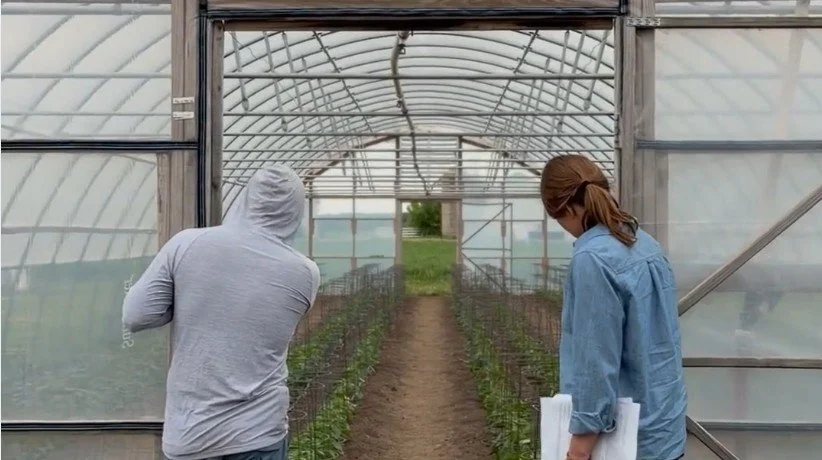
Israel, our Farm Production Lead, and Shannon, our Customer Experience Lead, checking out the progress of our tomato plants in the Spring of 2026.
Our Commitment to Certified Organic Farming
First and foremost, every item we sell as certified organic is exactly that. We grow in compliance with organic standards, and verify each of our partners’ certifications before offering those products to our members; anything that is certified organic is clearly labeled as such when you customize your weekly box.
Tomato Mountain Farm in Brooklyn, Wisconsin has been certified organic since shortly after its inception in 1993, first by the Organic Crop Improvement Association (OCIA), and for the last 20 years or so, by a local certifier, Midwest Organic Services Association (MOSA). For more than three decades we've followed rigorous organic standards while growing a diverse selection of greens, tomatoes, vegetables and other crops for our CSA program, market goers and restaurants.
Understanding Organic Certification
The USDA organic standards establish requirements for how crops are grown, including restrictions related to land, seed, additions for boosting fertility, and the use of other inputs, such as herbicides and pesticides. Certification also protects the integrity of organic products post-harvest by establishing requirements for handling, processing, labeling, and maintaining the identity of certified organic products throughout the supply chain.
Organic certification provides an important baseline for production and handling practices, but it does not necessarily tell the whole story about how a farm cares for its soil, water, or surrounding ecosystem. Our farm - as well as the farms we partner with, whether certified organic or not - uses practices that go beyond these baseline requirements.
These practices include building and protecting soil health, increasing soil carbon storage, reducing erosion, conserving water and energy, providing habitat for wildlife and beneficial insects, increasing biodiversity, and working to create healthier and more resilient farm ecosystems. For us, organic certification is an important standard, but our commitment to responsible farming goes well beyond the certification.
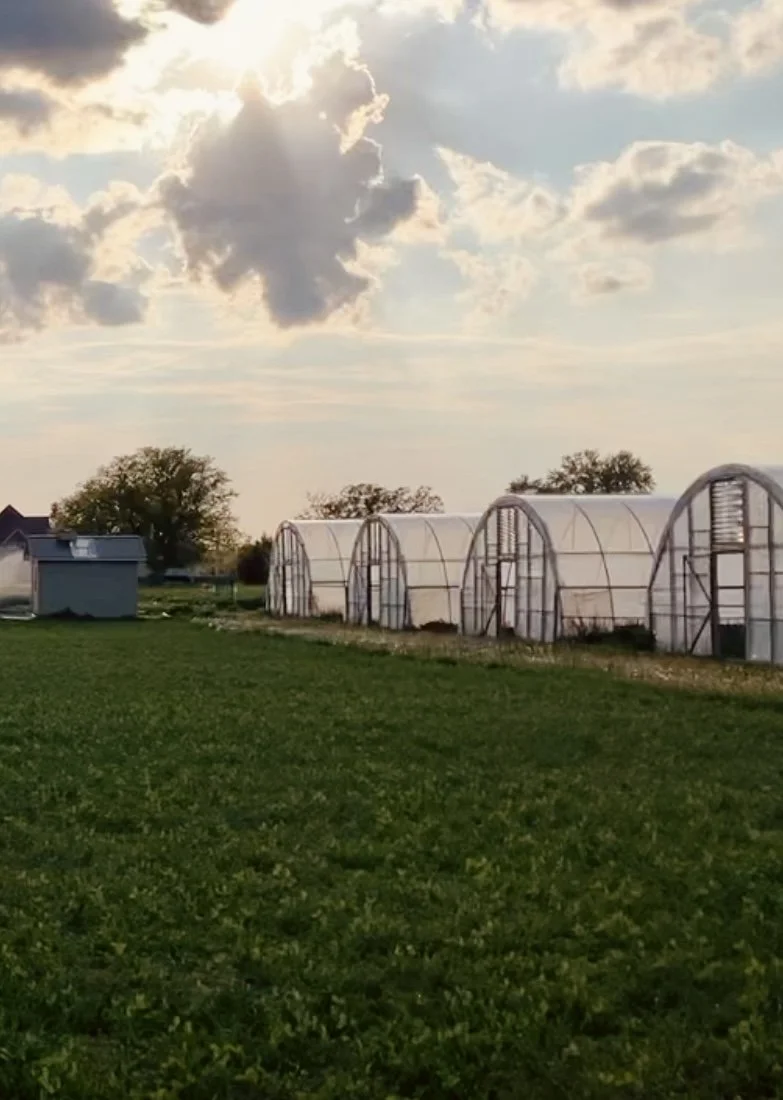
Why Some Great Farms Aren't Certified Organic
When selecting partner farms, we are more interested in how and why they farm rather than whether they’ve decided to pursue organic certification. Organic certification is an excellent program that provides accountability and consumer confidence, however, it also requires detailed record keeping, certification fees and significant administrative work. For many small family farms, those costs and time commitments simply aren't practical.
Many of the growers we know personally use sustainable farming methods that exceed the principles behind organic agriculture despite not carrying an official organic certification.
Rather than relying solely on labels, we build relationships. We visit farms, meet the families who operate them, learn about their growing practices and choose partners who share our values of stewardship, sustainability, and producing exceptional food.
Local First, Whenever Possible
Whenever possible, we prioritize sourcing produce from local farms throughout the Midwest, generally within 150 miles of Chicago. Supporting regional agriculture is one of the foundations of our CSA program. This commitment helps strengthen local food systems while providing fresher, more nutritionally dense, seasonal produce to our members. That said, not everything can be grown locally.
Products like citrus, dates and certain specialty items simply aren't produced in our climate. When sourcing these foods we work with regional partners who align with our commitment to quality and transparency.
Most of our citrus and other non-local organic staples come through Co-op Warehouse Partners in Minnesota, which supplies food co-ops throughout the Midwest. They source certified organic citrus and other produce from trusted growers. While we don't always know the exact farm each orange or lemon comes from (and we believe it's important to be transparent about that), we can verify that these products are certified organic.
When we partner with farms or producers outside the Midwest, it's typically because those products cannot be sourced locally. For example, we work with small, family-owned fishing operations in Alaska that already distribute in the Chicago market, allowing us to source high-quality seafood without expanding their transportation footprint. We also collaborate with a trusted citrus grower in Texas who has an existing partnership with our local partner, Springdale Farm.
Our goal is always to balance a local-first philosophy with thoughtful partnerships that provide products our members want while maintaining quality, transparency, and support for small producers.
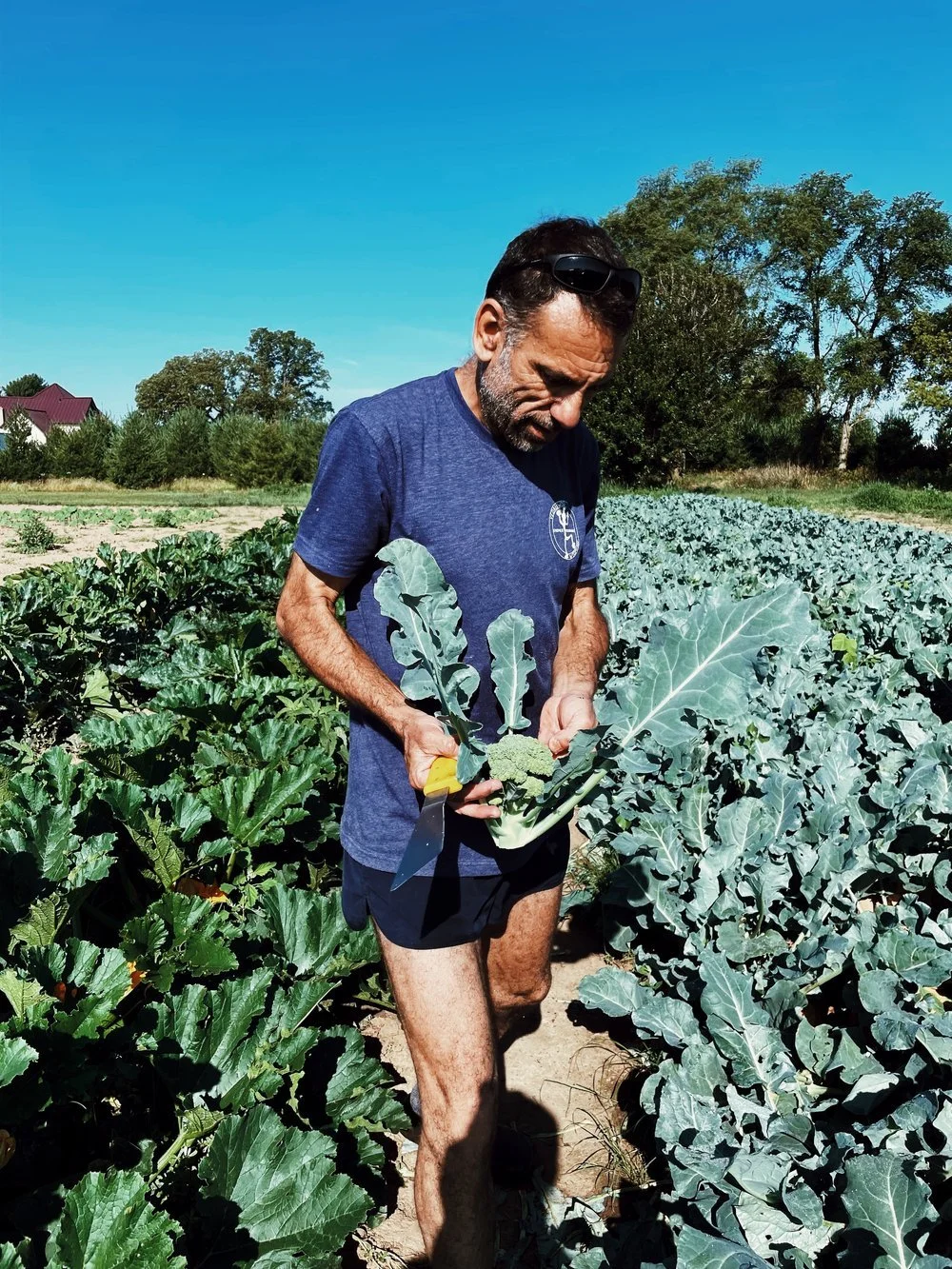
Tomato Mountain Farm Owner, Chris, harvesting broccoli
Looking Beyond the Organic Label
Organic certification is an important tool, but it doesn't automatically determine the quality of a product.
As Chris, owner of Tomato Mountain, explains:
"Fruit is among the hardest crops to grow under organic standards, which means there are relatively few local organic fruit producers. Some of my favorite apple growers are conventional farmers. Labels can be misleading and don't always tell the whole story."
For more than two decades, Chris has purchased fruit from Klug Farm because of the exceptional quality of their produce and the care they put into their land.
"I've been buying and eating Klug fruit for over 25 years. I personally buy about 20 pounds of their blueberries every summer. Their quality is outstanding. Certified Organic has little to do with quality. I always buy the highest quality I can find."
For Chris, the primary value of organic farming has never been marketing, it's protecting people and the environment.
"I've been an organic farmer for over 30 years because I believe reducing the exposure of farmers, farm workers, and the land to synthetic pesticides and herbicides matters. The people applying these chemicals experience far greater exposure than consumers ever will."
Organic Isn't Perfect
Organic certification establishes valuable baseline standards, but like any system, it has limitations. Some inputs prohibited under organic rules pose relatively low environmental risk while certain materials that are allowed can raise sustainability concerns.
Chris points to examples such as mined minerals, which may be permitted despite the environmental impacts of mining, whereas chemically identical manufactured alternatives may be prohibited simply because of how they were produced. Likewise, many organic farms rely on manure from conventional livestock operations, illustrating his viewpoint that the realities of growing food are often more complex than a simple "organic versus conventional" label.
These examples don't diminish the value of organic farming; they simply highlight that agriculture is nuanced. Every farming decision involves balancing environmental stewardship, soil health, crop productivity, economics and practical realities.
Transparency You Can Trust
At Tomato Mountain we believe transparency matters just as much as labels.
When something is certified organic we say so. When it isn't we're honest about why. We know our farmers personally, visit the farms we source from, and choose partners based on their commitment to producing exceptional food while caring for their land and communities.
Our mission has never been to chase labels. It's to build a food system rooted in trust, sustainability and lasting relationships, connecting our members with food we are proud to feed our own families.